LIVE THEATRE EVALUATION
〰️
LIVE THEATRE EVALUATION 〰️
PRE-PERFORMANCE EXPLORATIONS
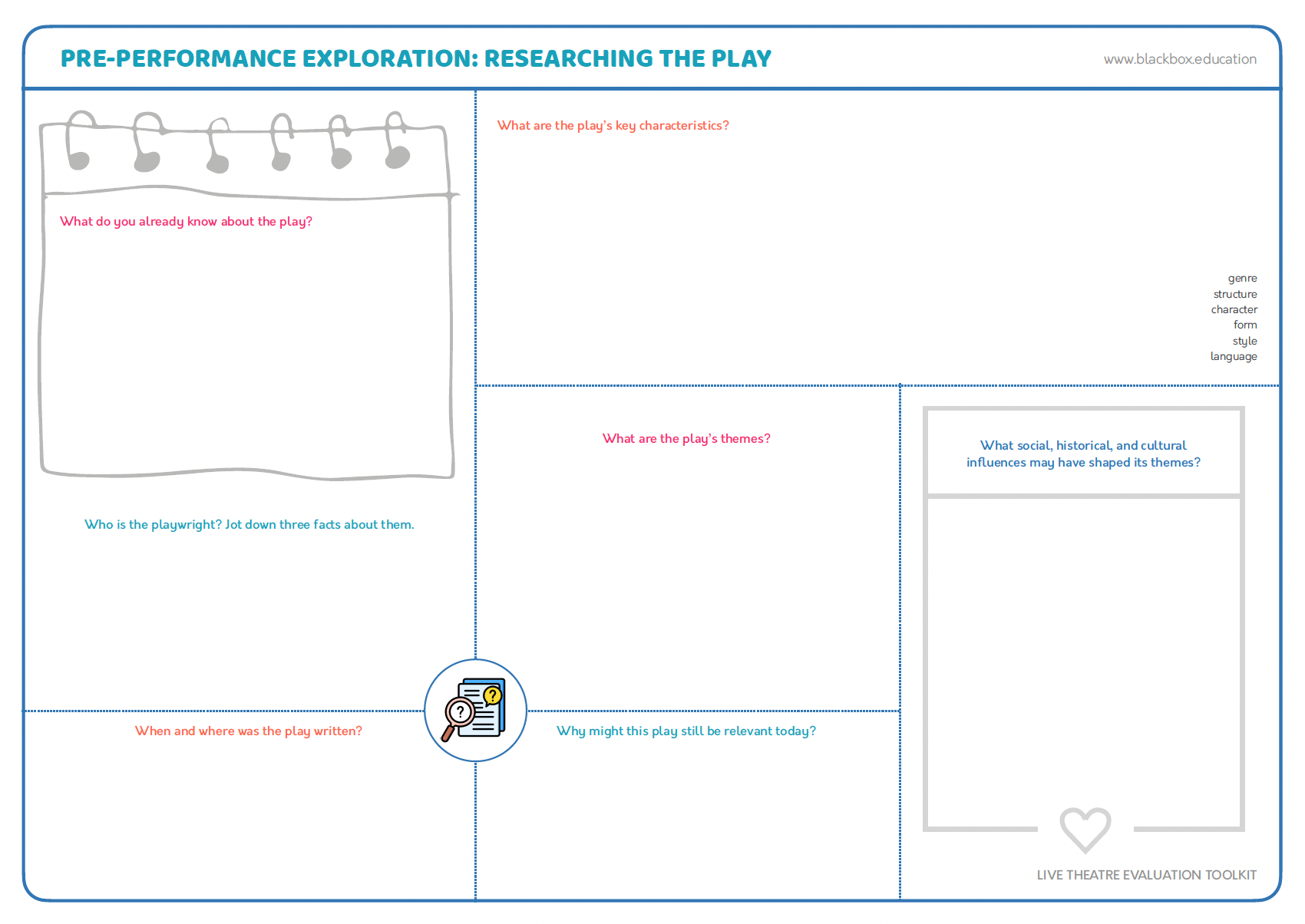
These explorations prepares students before they watch a production. It encourages them to research the play, playwright, director, theatre company, designers, historical context, form, and key themes. This gives students a stronger foundation for understanding creative choices when they see the performance live.

POST-PERFORMANCE GROUP EXPLORATIONS
These activities help students process the performance collaboratively after watching it. Through reflection circles, mind maps, debates, emotional journey graphs, audience impact discussions, and short reviews, students can compare interpretations and develop their evaluative thinking through discussion.


POST-PERFORMANCE INDIVIDUAL EXPLORATIONS
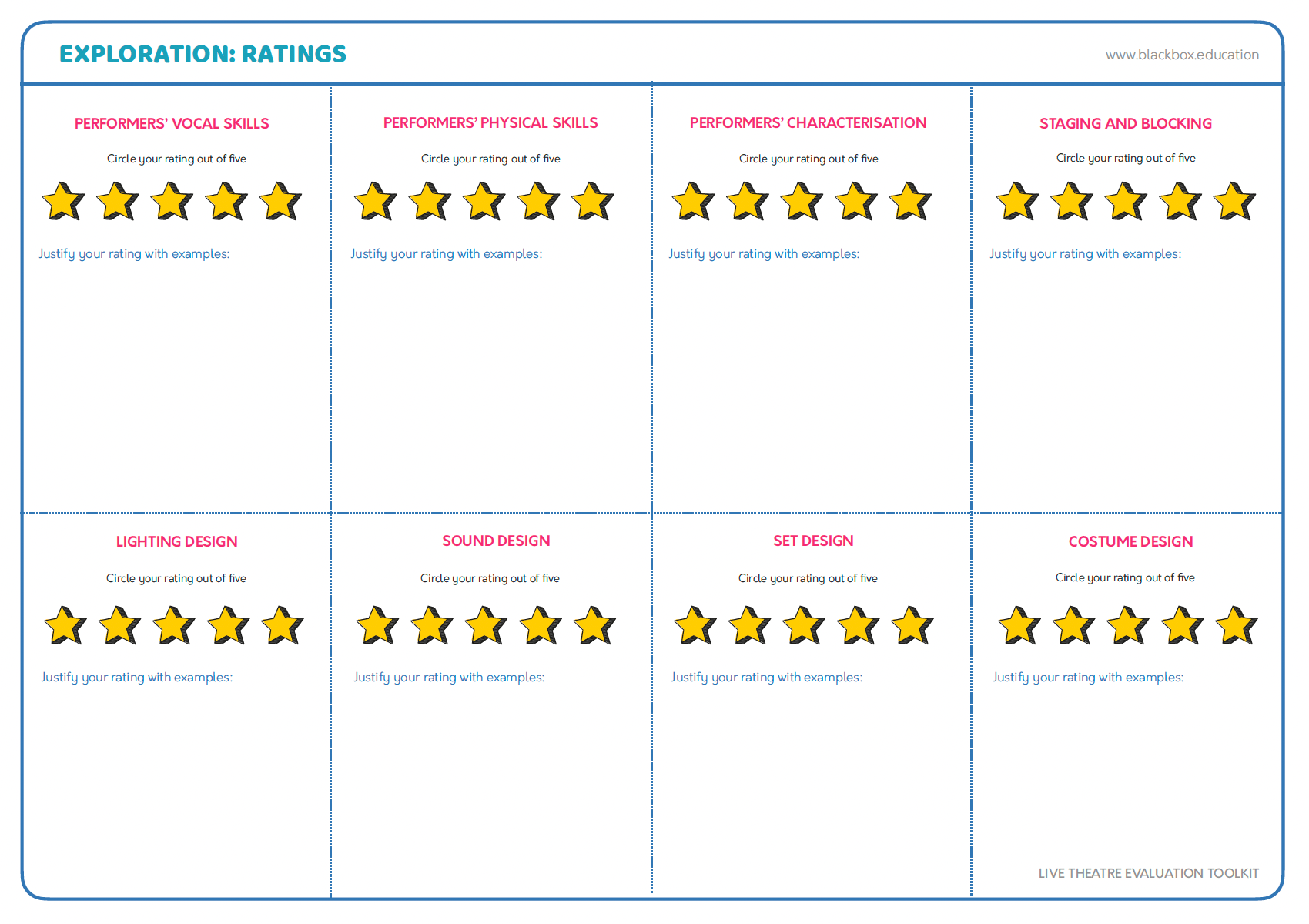
This category supports students in analysing the production as a whole. It includes tools for exploring creative choices, conventions, key scenes, character and actor analysis, director’s vision, design sketches, ratings, and emotional response. It helps students link specific moments to meaning and audience impact.

LIGHTING DESIGN
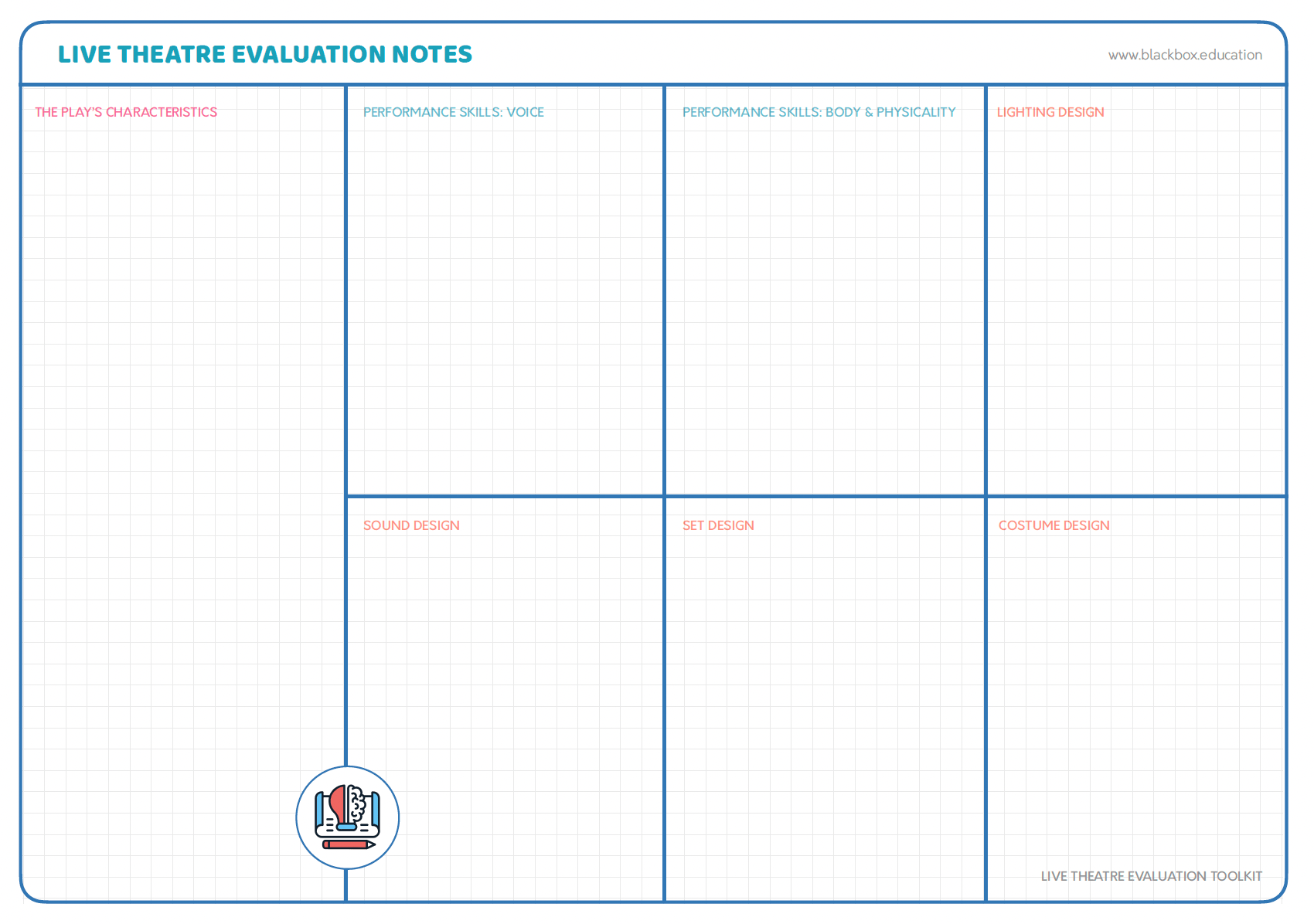
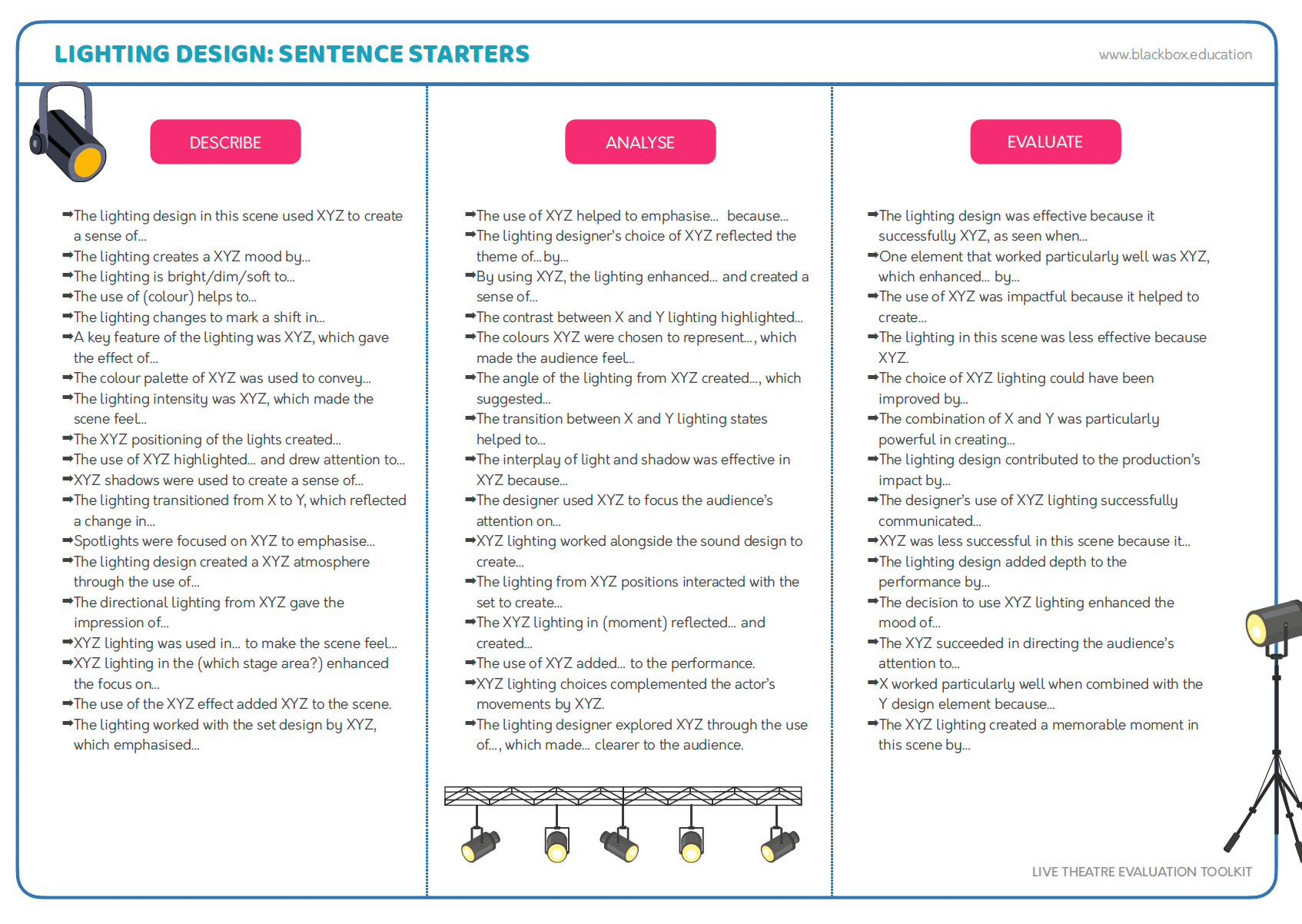
Students focus on how lighting shapes mood, atmosphere, focus, symbolism, time, place, and emotional impact. The toolkit provides key vocabulary, guiding questions, note templates, mind maps, sketch tasks, and sentence starters to help students describe, analyse, and evaluate lighting choices accurately.

SET DESIGN
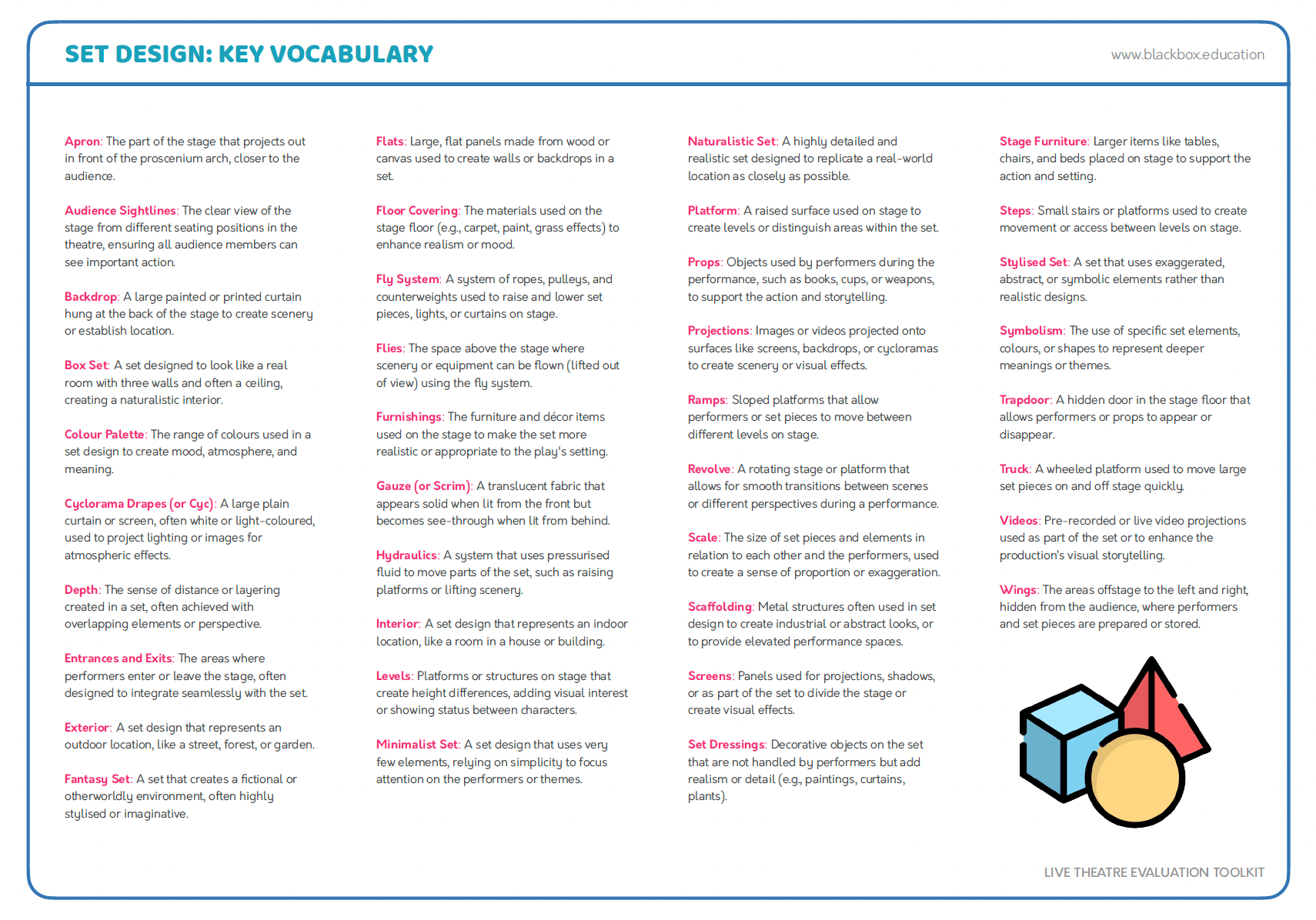
This section helps students evaluate how the set creates the world of the play. Students consider location, time period, levels, space, props, materials, texture, symbolism, entrances, exits, and scene changes, and how these choices support storytelling and audience engagement.
SOUND DESIGN
Students examine how sound contributes to the production’s atmosphere and meaning. This includes music, sound effects, soundscapes, silence, volume, direction, transitions, rhythm, and live or recorded sound. The resources guide students to consider how sound works with performance and other design elements.


COSTUME DESIGN
This category focuses on how costume communicates character, status, setting, time period, mood, and themes. Students analyse colour, fabric, texture, fit, silhouette, condition, accessories, hair, make-up, practicality, and symbolism, helping them understand costume as a storytelling tool.


VOCAL SKILLS & VOICE
Students evaluate how performers use vocal skills to create character and communicate meaning. This includes pitch, pace, tone, volume, emotional range, and accent. The resources encourage students to connect vocal choices to character, relationships, atmosphere, and audience response.


PHYSICAL SKILLS & BODY
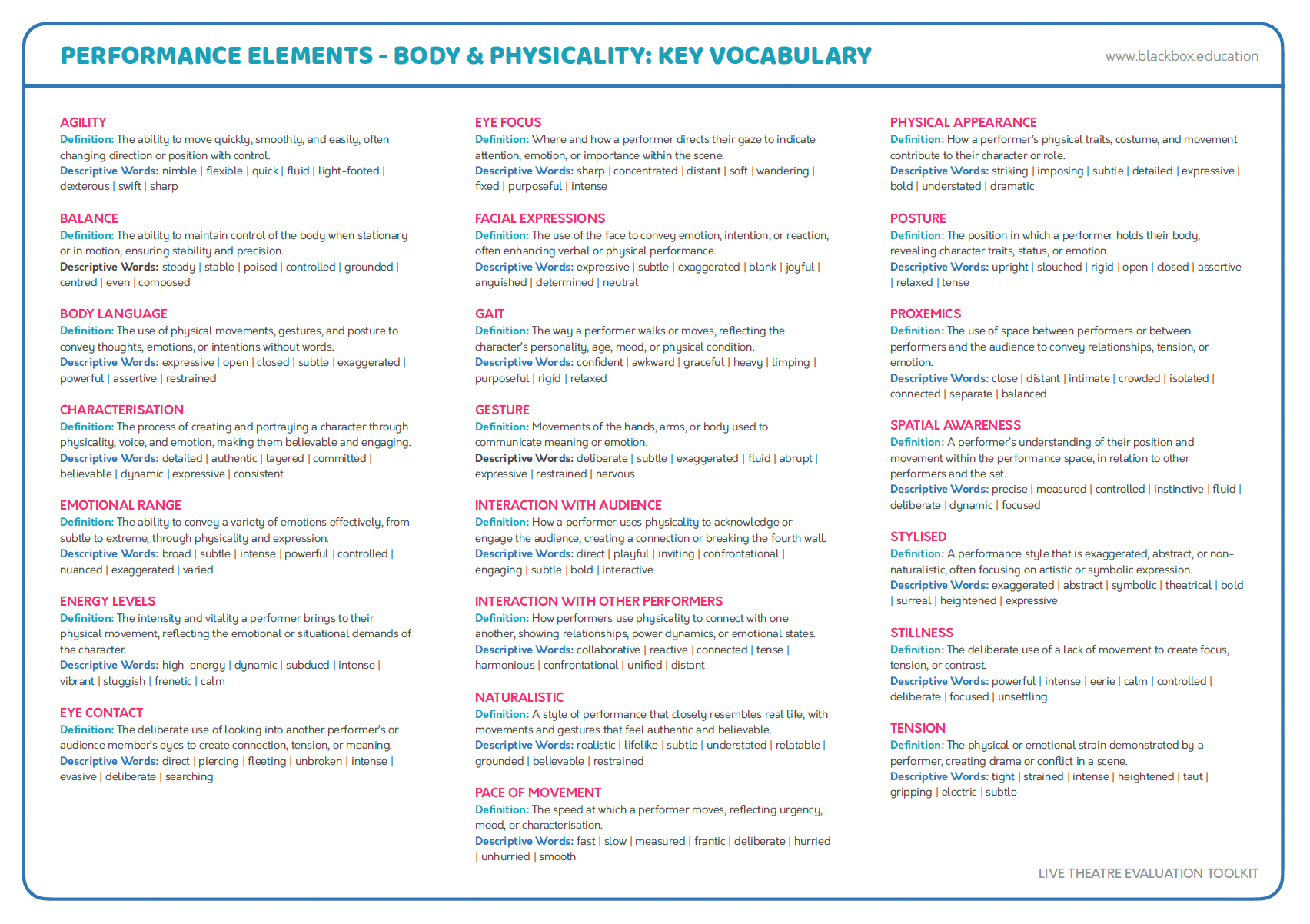
This section helps students analyse the actor’s physical performance. Students look at posture, gesture, facial expression, movement, energy, pace, eye contact, levels, proxemics, stillness, and physical interaction. It supports students in evaluating how physical choices reveal character, emotion, relationships, and themes.
Space, Staging, Conventions and Play Characteristics
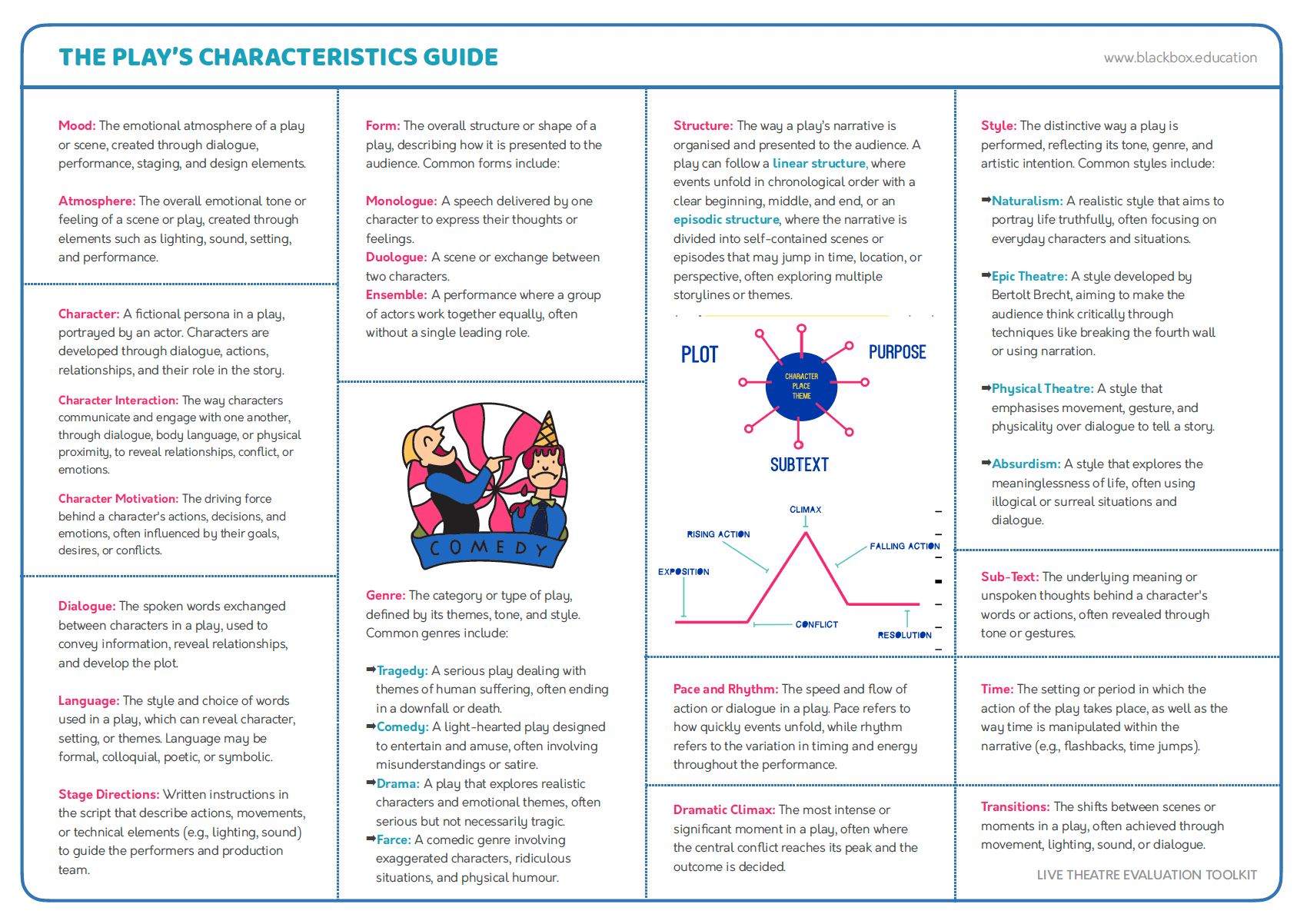
This final category helps students understand the wider theatrical language of the production. It covers stage configuration, blocking, proxemics, levels, sightlines, transitions, dramatic conventions, genre, form, structure, style, mood, atmosphere, language, and character. These resources help students place individual production choices within the broader framework of theatre-making.