SPACE & STAGING
〰️
SPACE & STAGING 〰️
Theatre Architecture
Theatre Architecture is an interactive learning resource for drama and theatre students. Using a detailed theatre diagram, students click on key areas of the building to learn what each space is called and how it is used in performance.
Students can then test their understanding through two interactive activities: a Drag & Drop labelling game and a Match Up vocabulary challenge. This resource is ideal for introducing theatre spaces, preparing students for theatre visits, supporting technical theatre lessons and revising key terminology.
STAGE POSITIONS EXPLORER
This interactive explorer introduces students to the essential language of stage positions. It explains the actor’s perspective, breaks the stage into width and depth zones, and guides students through all nine stage positions with practical examples, common uses, pros and cons.
The included game also allows students to test their understanding by moving a character to the correct position on stage.
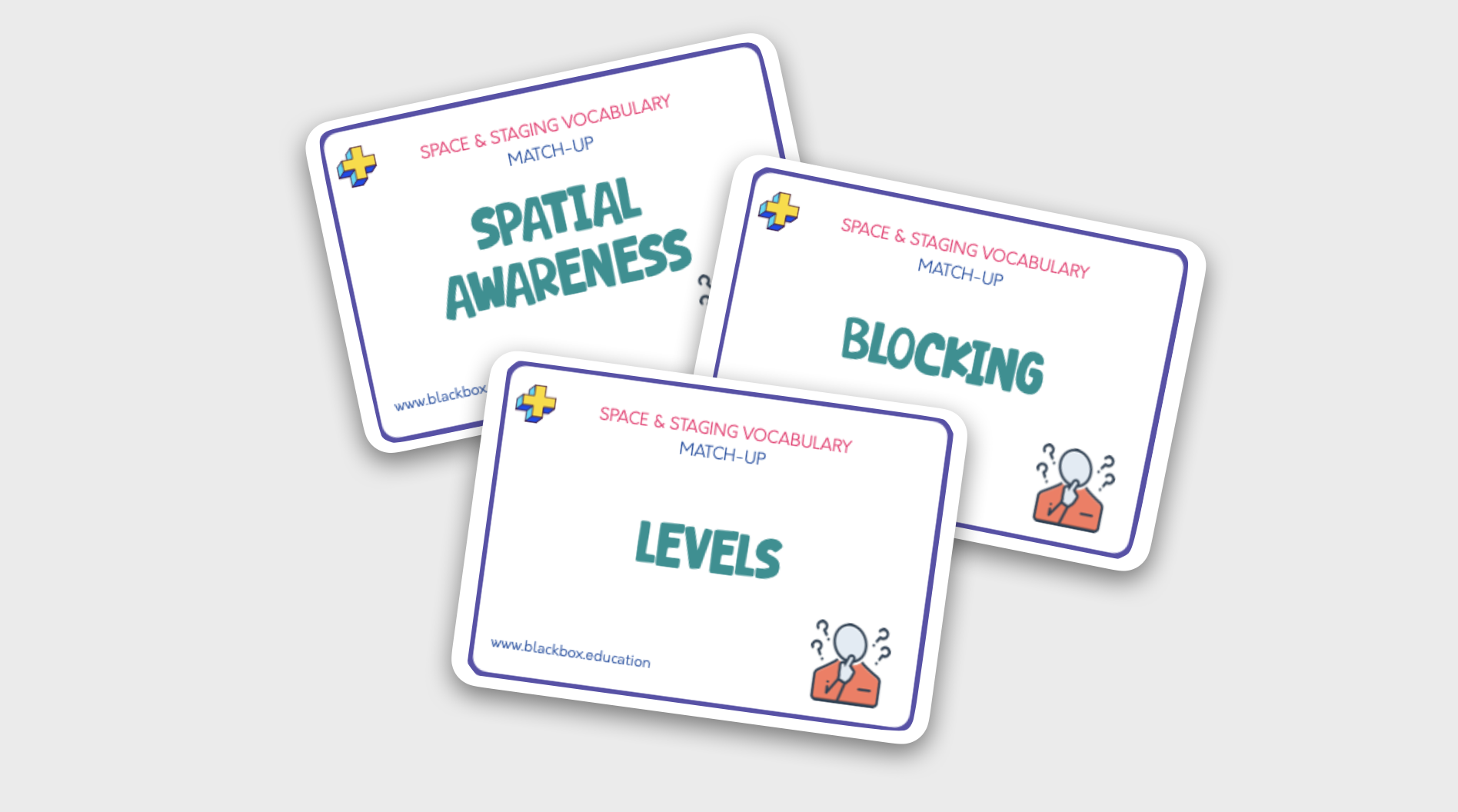
SPACE & STAGING vOCABULARY

STAGE CONFIGURATIONS INTERACTIVE EXPLORER
This interactive explorer introduces students to six key staging configurations: theatre in the round, proscenium arch, thrust stage, traverse, end-on staging and promenade.
It is designed to help students understand how the layout of a performance space affects the choices made by performers, directors and designers. Through the interactive features, students can compare how each configuration influences sightlines, blocking, masking, levels, the fourth wall and the actor-audience relationship.
THE DRAMA STUDENT’S GUIDE TO BLOCKING
An interactive learning resource for drama students exploring the key principles of blocking.
Students can navigate through visual, student-friendly sections on stage directions, movement, levels, proxemics, focus, character, power, emotion and safety.
Perfect for classroom teaching, rehearsal support or independent revision.
BODY + SPACE KNOWLEDGE ORGANISERS
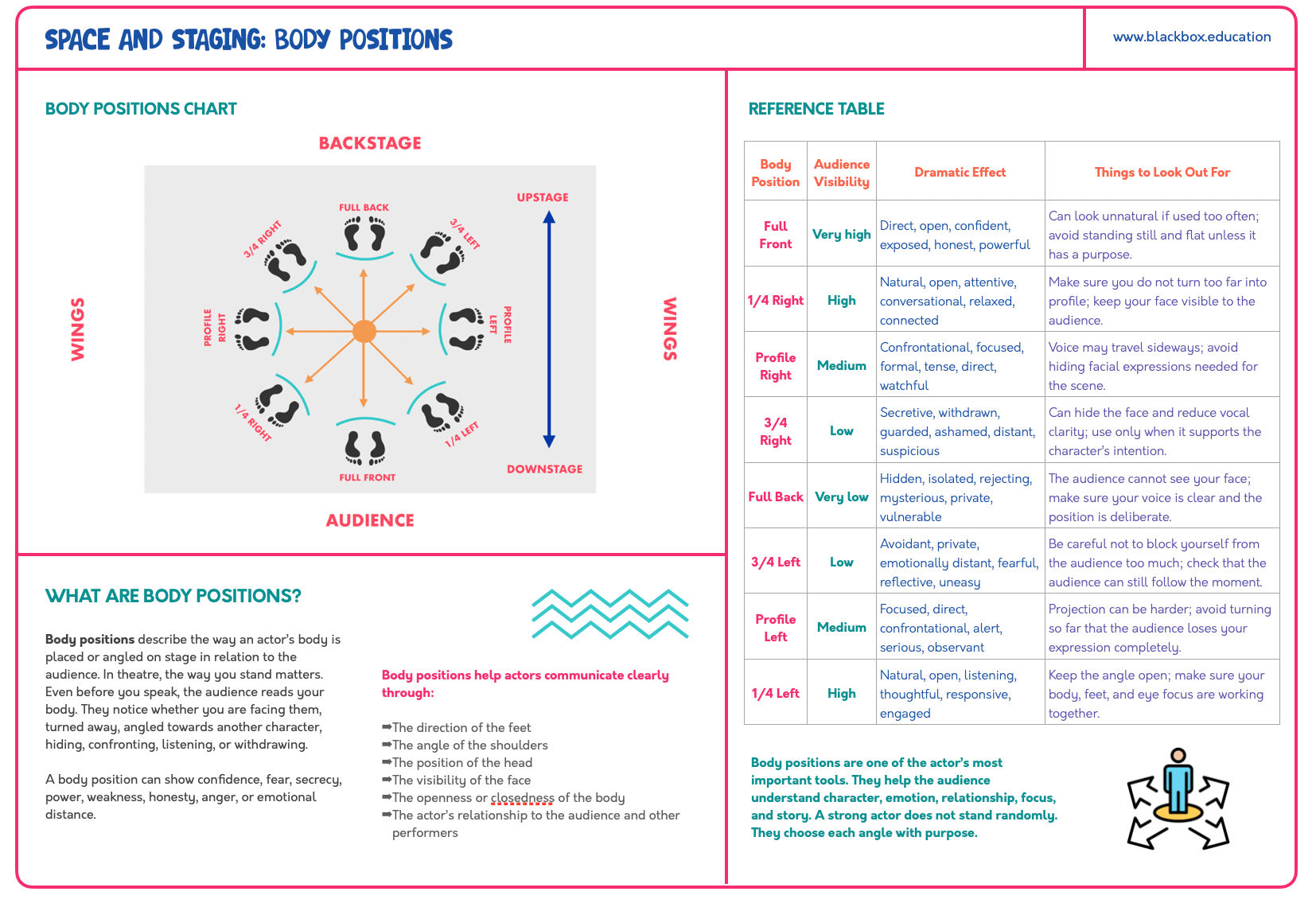
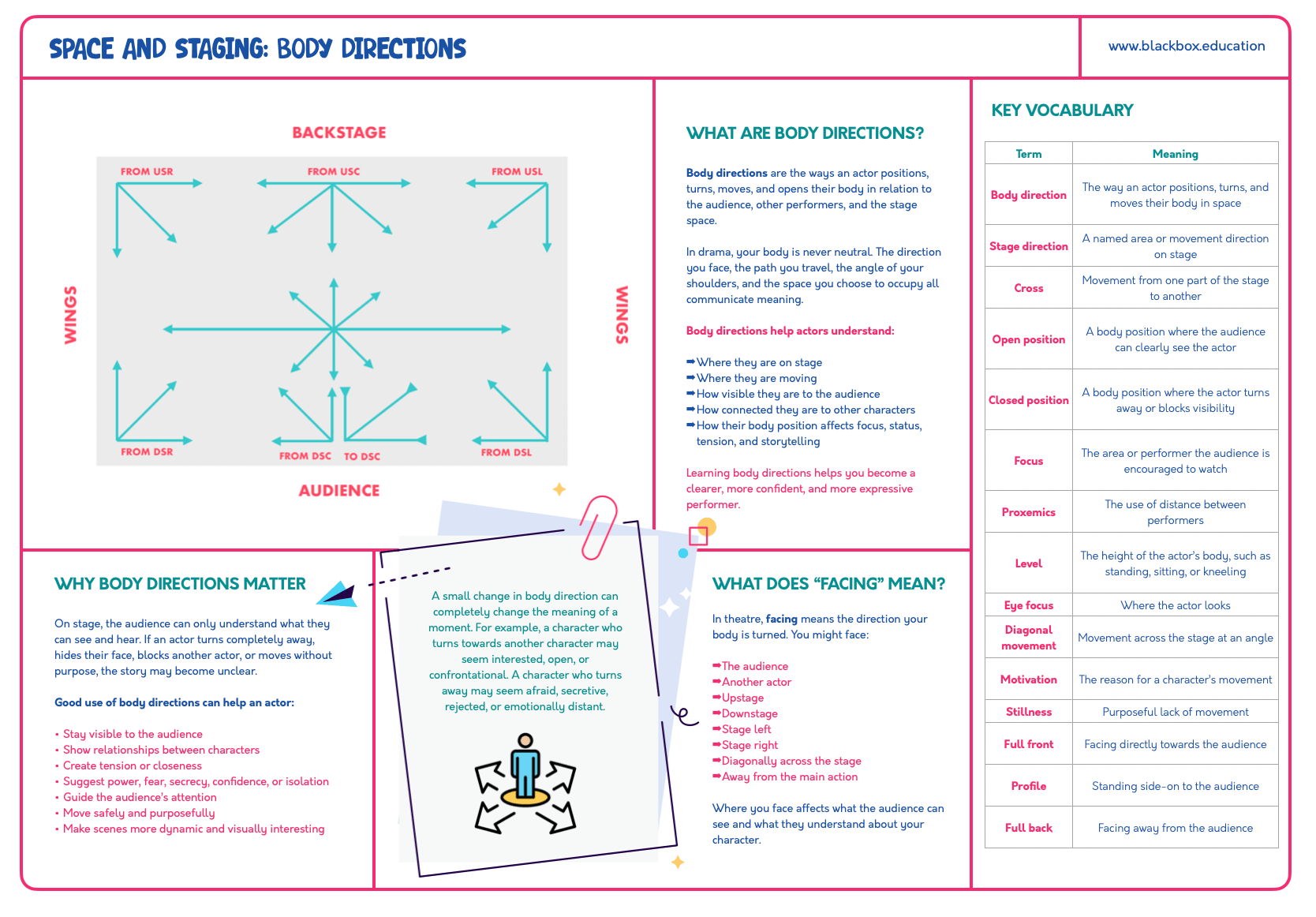
These Body + Space Knowledge Organisers help drama students understand how performers use their bodies and the stage space to communicate meaning. Covering body directions, proxemics and body positions, they give students clear visual references, key vocabulary and practical examples for creating focus, relationships, tension, status and atmosphere on stage.
They can be used to introduce staging skills, support practical rehearsal work, develop students’ use of drama terminology and help learners make more purposeful choices about movement, positioning and audience awareness.